

Summer at the RoboMat Lab Pool


Image: Alex Mascaraque León y Ángela García Grech

Summer is officially here ☀️, and with it comes swimming pool season. Looking at this month’s image, it might seem like our lab has taken a holiday. A trampoline, a crocodile, a flamingo… 🐊🦩 But appearances can be deceiving. Our “swimming pool” is, in fact, representing a water bath as part of an automated degradation platform, and its guests are not simply enjoying a summer holiday. In this water bath, polymeric materials are immersed in controlled degradation conditions, allowing us to understand how materials change over time when they are exposed to different solutions.

This Image of the Month highlights our automated degradation monitoring system 🤖. In this setup, to allow every sample to have its own degradation environment, Falcon tube caps are replaced by custom polypropylene (PP) caps that hold each sample individually. This modification transforms every tube into an independent degradation chamber. Traditionally, degradation studies have relied on manual handling, with researchers periodically retrieving samples for characterization before returning to repeat the process days or weeks later. While effective, this approach is time-consuming and limits the number of materials and conditions that can be investigated simultaneously.

Every swimming pool needs a lifeguard 🛟. Ours just happens to be a robot. The robot takes care of repetitive and time-consuming operations, ensuring precision and consistency, making sure every sample follows the same protocol. By combining collaborative robotics with a modular degradation platform, we can automate repetitive tasks, increase experimental throughput, improve reproducibility, and explore a much broader range of materials and degradation conditions.

Image of the month - July 2026

216694 2

Alex Mascaraque León

PhD Researcher

Ángela García Grech

PhD Researcher


Don’t forget to follow us on Linkedin to keep updated of all the relevant information from the BCD group! 

New publication in Small Structures

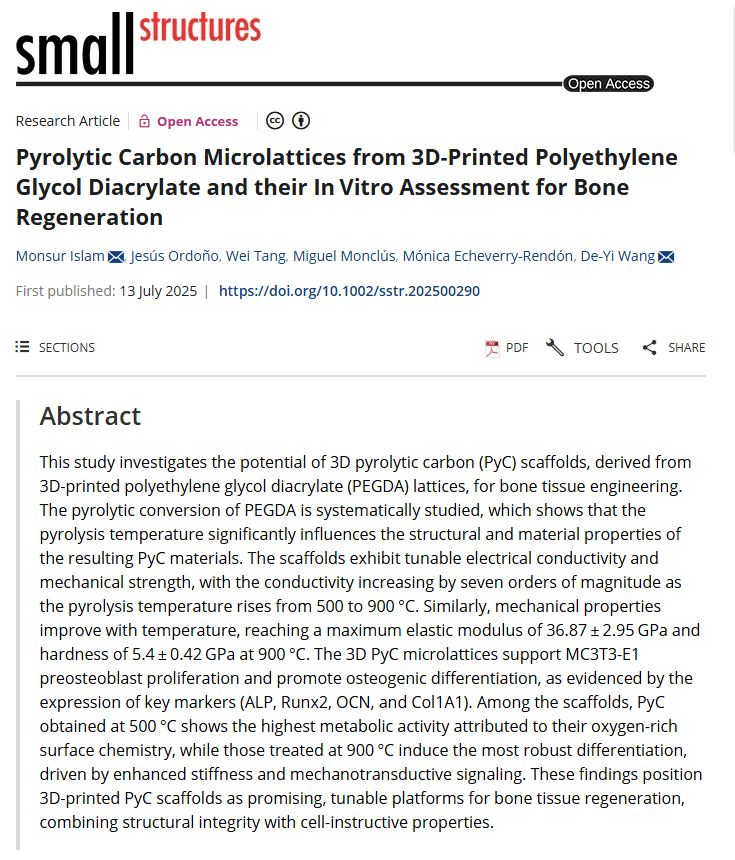
BCD research group has recently published a new publication in Small Structures! Congrats to our colleagues,  Monsur, Jesus,and Monica! Title: Pyrolytic Carbon Microlattices from 3D-Printed Polyethylene Glycol Diacrylate and their In Vitro

Read More »

New publication in Biomaterials Science

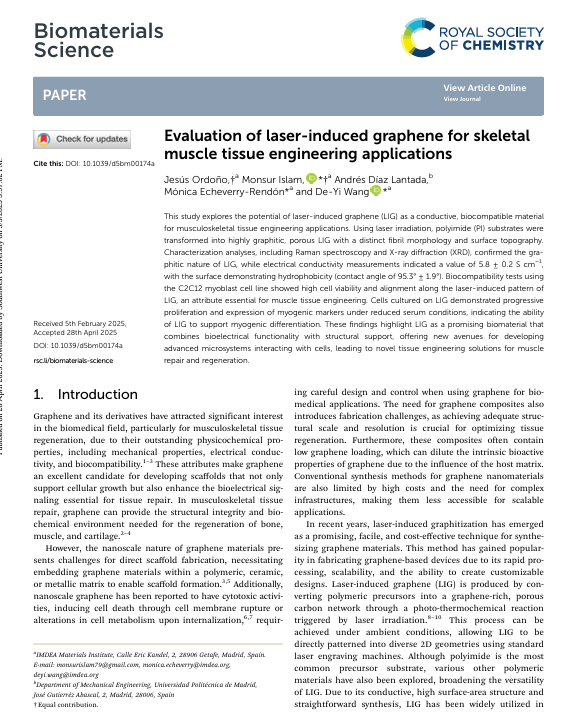
BCD research group has recently published a new publication in Biomaterials Science! Congrats to our colleagues, Jesus, Monsur and Monica! Title: Evaluation of laser-induced graphene for skeletal muscle tissue engineering applicationsAuthors: Jesús

Read More »

New publication in Next Materials

BCD research group has recently published a new publication in Next Materials! Congrats to our colleagues, Yuyao and Monica! Title: 3D-printed biodegradable polymer scaffolds for tissue engineering: An overview, current

Read More »

New publication in Small Structures

BCD research group has recently published a new publication in Small Structures! Congrats to our colleagues,  Monsur, Jesus,and Monica! Title: Pyrolytic Carbon Microlattices from 3D-Printed Polyethylene Glycol Diacrylate and their In Vitro

Read More »

New publication in Biomaterials Science

BCD research group has recently published a new publication in Biomaterials Science! Congrats to our colleagues, Jesus, Monsur and Monica! Title: Evaluation of laser-induced graphene for skeletal muscle tissue engineering applicationsAuthors: Jesús

Read More »

New publication in Next Materials

BCD research group has recently published a new publication in Next Materials! Congrats to our colleagues, Yuyao and Monica! Title: 3D-printed biodegradable polymer scaffolds for tissue engineering: An overview, current

Read More »

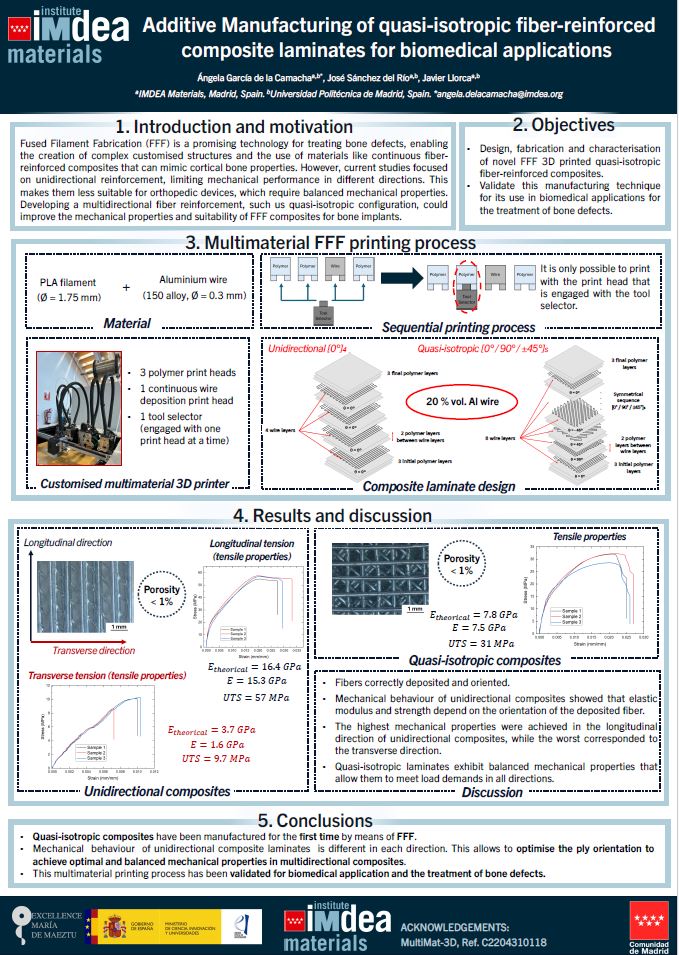
Additive manufacturing of quasi-isotropic fiber-reinforced composite laminates for biomedical applications

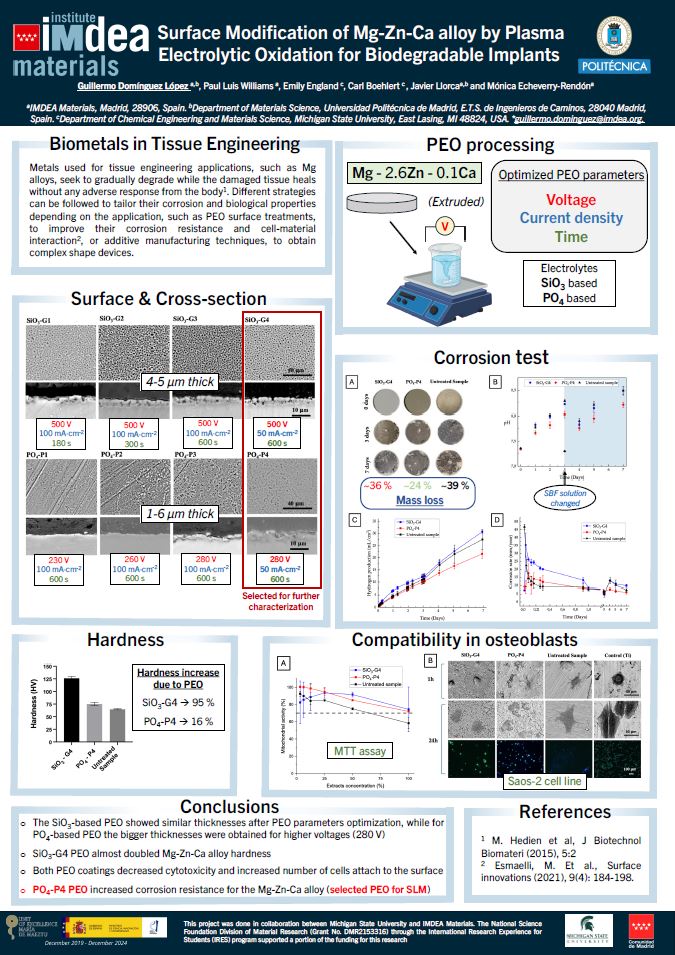
Surface modification of Mg-Zn-Ca alloy by plasma Electrolytic Oxidation for Biodegradable Implants

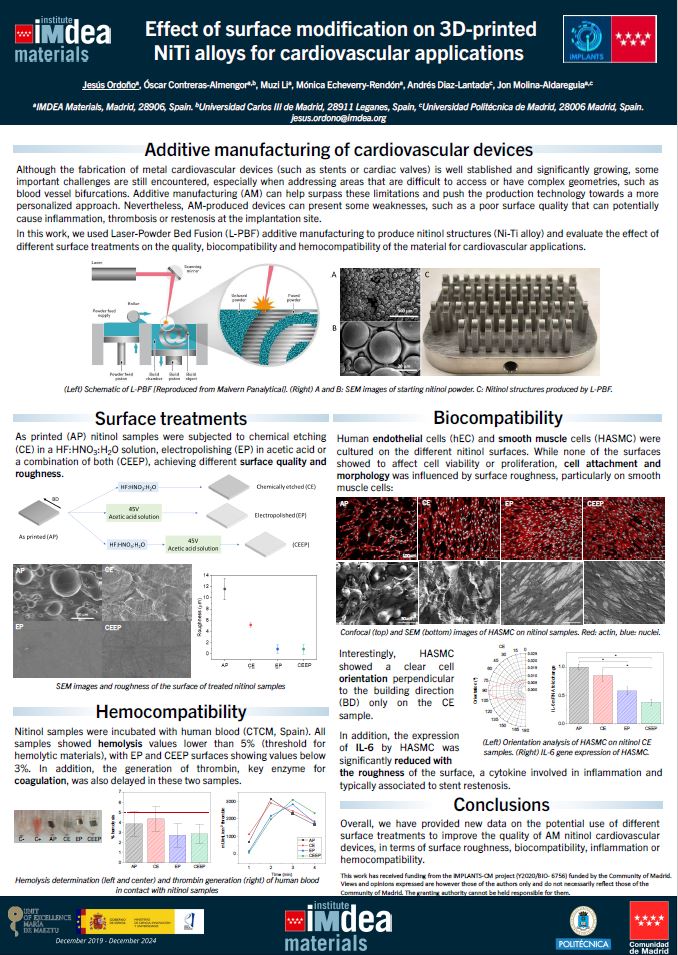
Effect of surface modification on 3D-printed NiTi alloys for cardiovascular applications