Welcome to our New Team Member at BCD! 👩🔬
We are very happy to welcome Dr. Patricia González Jiménez as a new postdoctoral researcher in the BCD Group. Her work aims to bridge experimental models and predictive tools to
Image: Ángela García Grech y Patricia González Jiménez
📣 Piiiiip! The match begins
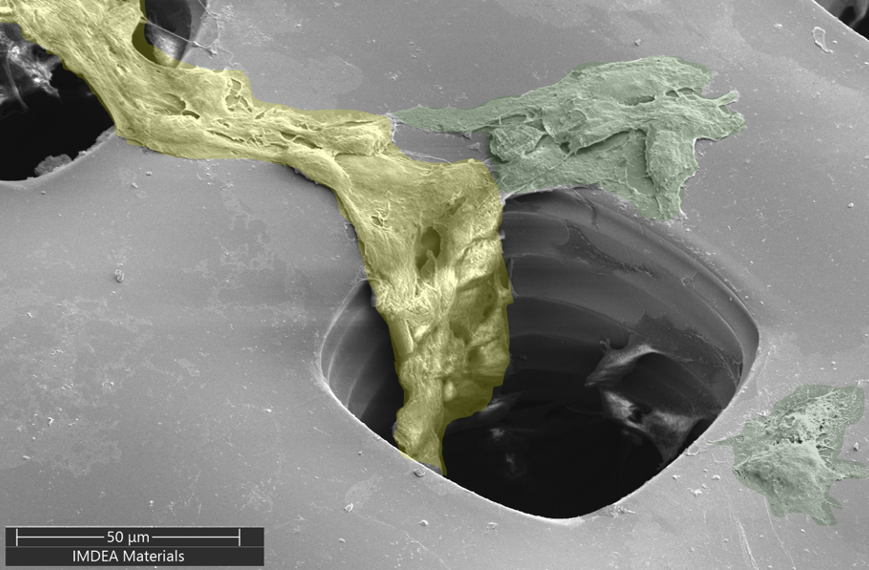
Now that the World Cup is about to start, we can’t ignore the similarities between science and football with this Image of the Month. In the same way that a football team can’t be understood by watching players perform alone, cellular function depends strongly on interactions within a collective environment.
📣 Piiiiip! From 2D to 3D
Traditionally, researchers have broadly employed 2D, monolayer cell cultures to study the functions of cells, as well as to perform different assays to analyze and validate different therapeutical strategies. Indeed, their establishment marked a new era in biological research, pushing forward the knowledge of molecular mechanisms and triggering great advances in this field. However, studying cells in 2D environments provides only a partial picture of their true behavior. 2D cell cultures can reproduce most cellular properties, but they do not fully mimic the real conditions found in living organisms. All cells in the body exist in a 3D environment, establishing cell-cell and cell- extracellular matrix (ECM) interactions that are essential for cellular responses. Cells, just like football players, like to team up and play as a group. And just like in football, not every player plays the same position. The position in which they play of influences how they behave, interact with others, and shapes their unique characteristics.
📣 Piiiiip! Teamwork in the cellular field
By growing together instead of alone, cells communicate, cooperate, and create complex structures that are much closer to real life. For these reasons, researchers started to develop 3D cell cultures, which provide a more precise representation of the in vivo environment and fill the gap between 2D culturing and experiments with animals. As a result, they are more reliable for studying cellular behaviors, molecular mechanisms, and drug responses. Among the different 3D cell cultures, we can find spheroids – cell aggregates that form sphere-like structures and mimic the organization of cells in tissues. Spheroids don’t require scaffolding to form 3D cultures, they just simply stick to each other when they are growing in the presence of a surface not compatible for cell attachment. However, they can also be formed using materials that mimic ECM, which act as a scaffold for the cells to grow. Spheroids are promising models in numerous applications, including tissue engineering (vascularization, regeneration), neurodegenerative diseases (Alzheimer, Parkinson), cancer research (mimicking tumor structure and microenvironment) or drug screening and carrier (testing their delivery, efficacy or assessing cancer drug resistance), among others.
📣 Piiiiip! Spheroids enter the pitch
In this Image of the Month, we can observe spheroids of U-87 MG cell line, established from a human glioblastoma, laying on a low-attachment surface of agarose after their initial formation through the hanging-drop method. These structures constitute a great model in neuro-oncology, since they replicate the cellular interactions and the hypoxia-induced resistance commonly observed in solid brain tumors. Normally, spheroids form compact spherical structures (bottom right image). However, as sometimes occurs in some football teams, misunderstandings might happen and a few small cracks may appear. What looks like a football player and ball (top left picture), they are two spheroids in formation.
📣 Final whistle!
In science and in football, teamwork changes everything: individual players matter, but it’s the collective effort that makes the real difference.
PhD Researcher
Postdoc Researcher
Don’t forget to follow us on Linkedin to keep updated of all the relevant information from the BCD group!

We are very happy to welcome Dr. Patricia González Jiménez as a new postdoctoral researcher in the BCD Group. Her work aims to bridge experimental models and predictive tools to

Last week, from January 22nd to 24th, members of the BCD Group attended the II Workshop on Additive Biofabrication, held in Santiago de Compostela. The event brought together researchers working

We are delighted to share that last Friday, January 16th, our colleague Guillermo Domínguez López successfully defended his PhD thesis, a major milestone and a truly well-deserved achievement! Guillermo has

We are very happy to welcome Dr. Patricia González Jiménez as a new postdoctoral researcher in the BCD Group. Her work aims to bridge experimental models and predictive tools to

Last week, from January 22nd to 24th, members of the BCD Group attended the II Workshop on Additive Biofabrication, held in Santiago de Compostela. The event brought together researchers working

We are delighted to share that last Friday, January 16th, our colleague Guillermo Domínguez López successfully defended his PhD thesis, a major milestone and a truly well-deserved achievement! Guillermo has
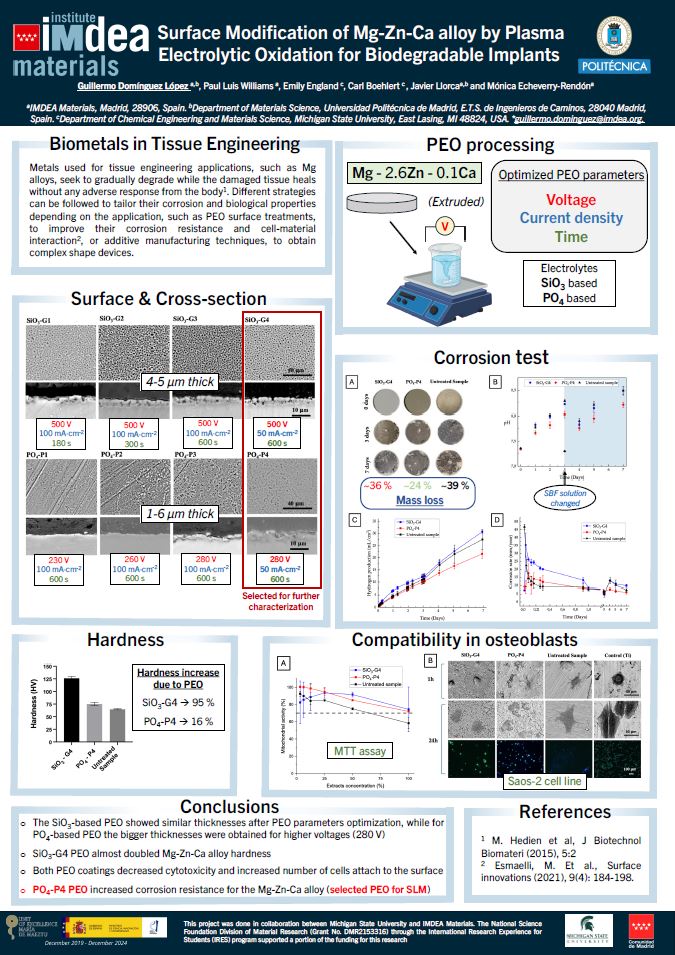
Nafiseh Mollaei, Alireza Rezaei, Biaobiao Yang, Mónica Echeverry-Rendón, Jon M. Molina-Aldreguía, Federico Sket, Javier Llorca, Acta Materialia, 2026
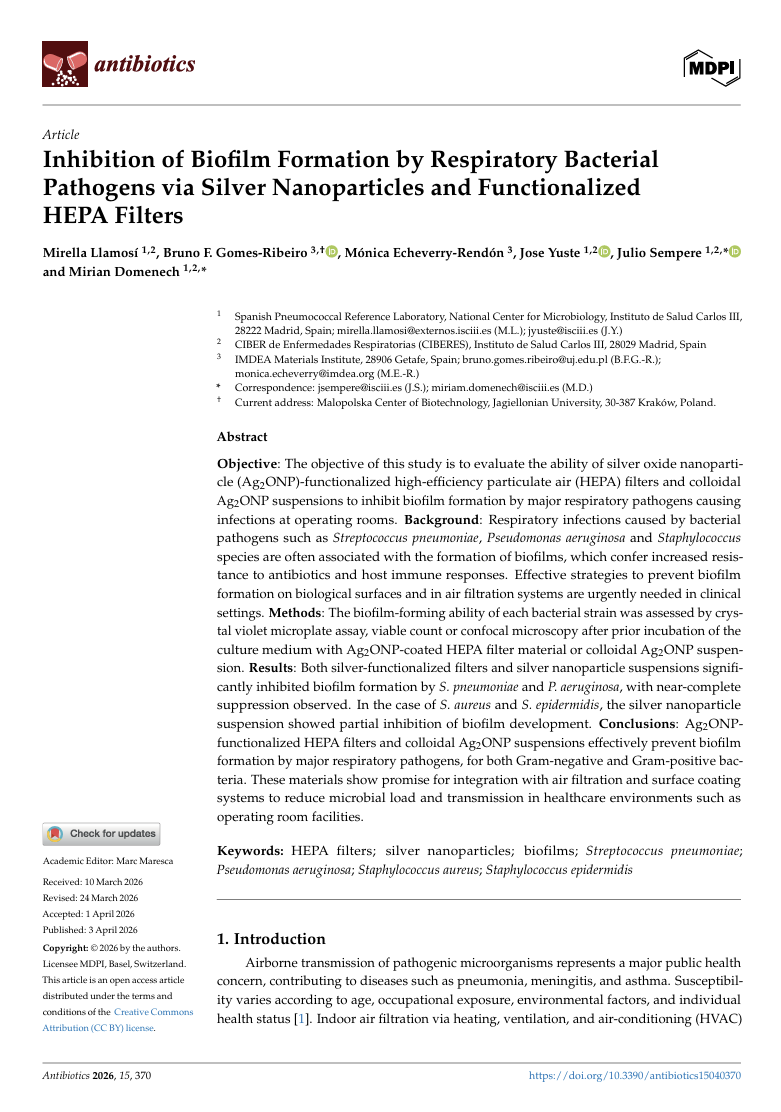
Mirella Llamosí, Bruno F. Gomes-Ribeiro, Mónica Echeverry-Rendón, Jose Yuste, Julio Sempere, Mirian Domenech, Antibiotics, 2026
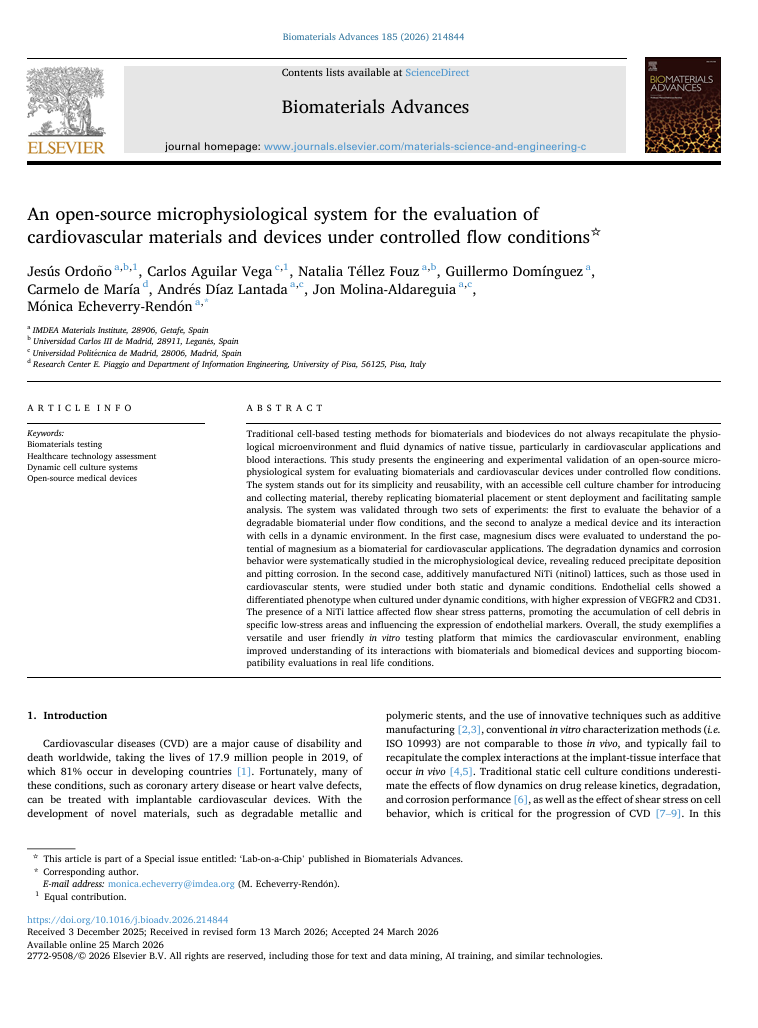
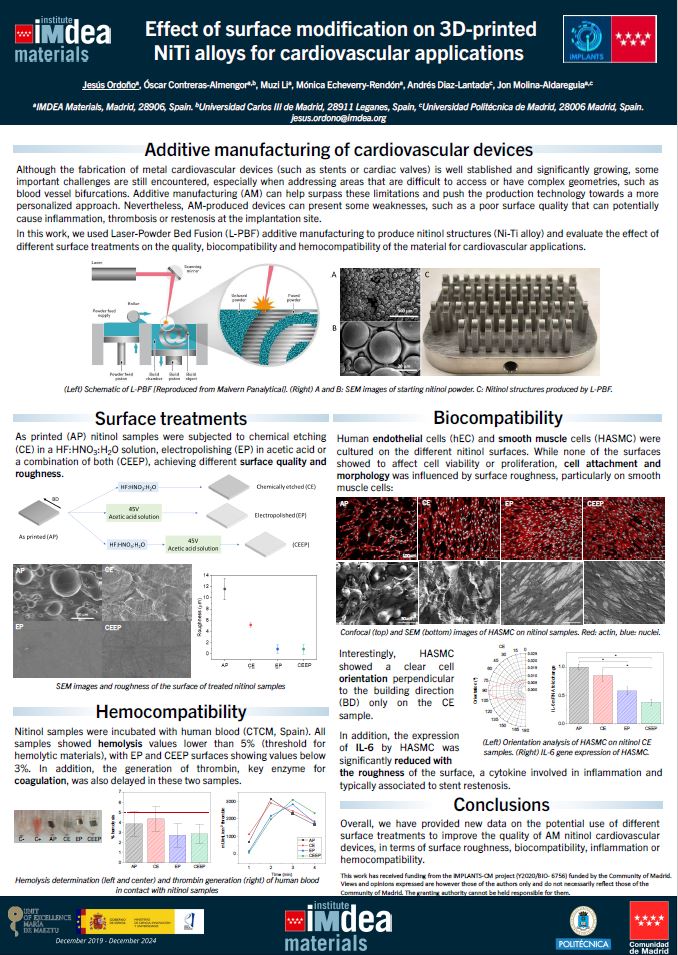
Jesús Ordoño, Carlos Aguilar-Vega, Natalia Téllez-Fouz, Guillermo Domínguez, Carmelo de-María, Andrés Díaz-Lantada, Jon Molina-Aldareguia, Mónica Echeverry-Rendón, Biomaterials Advances, 2026