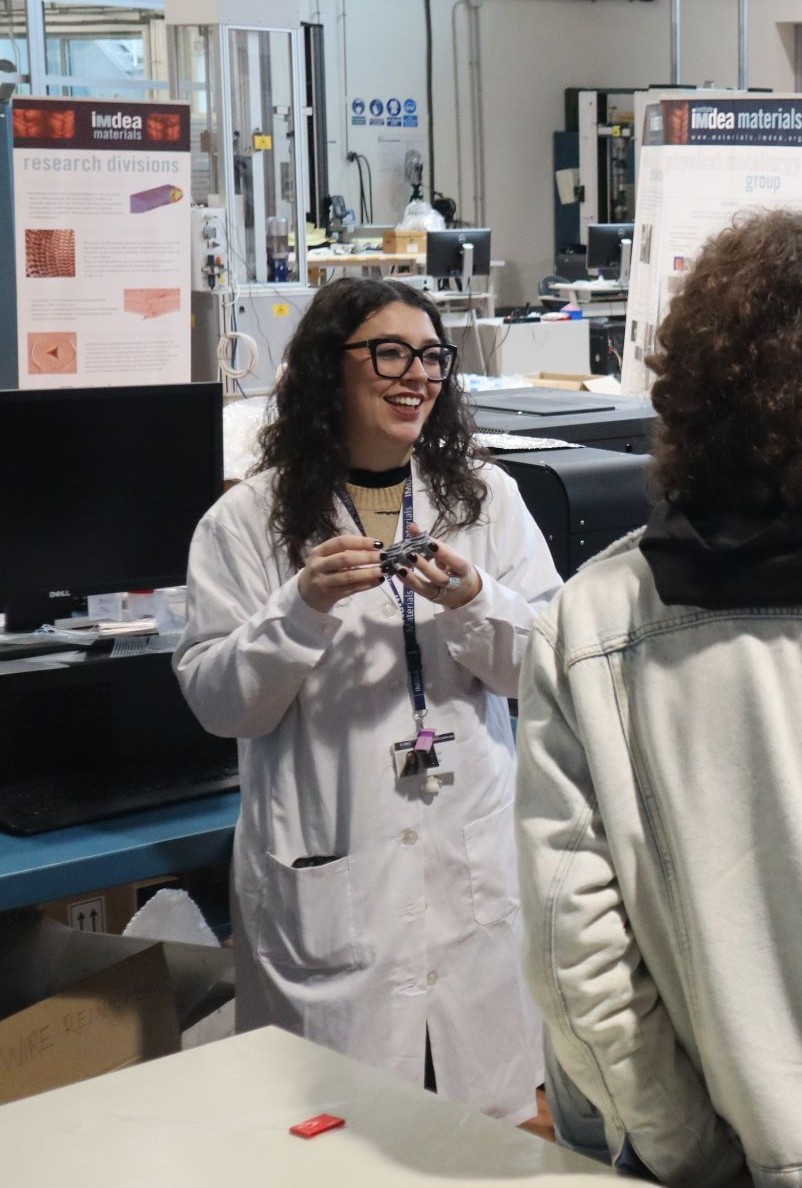
💜🔬✨ International Day of Women and Girls in Science ✨🔬💜
Today, we celebrate the International Day of Women and Girls in Science, a day to recognize the talent, dedication, and impact of the many women who contribute every day to
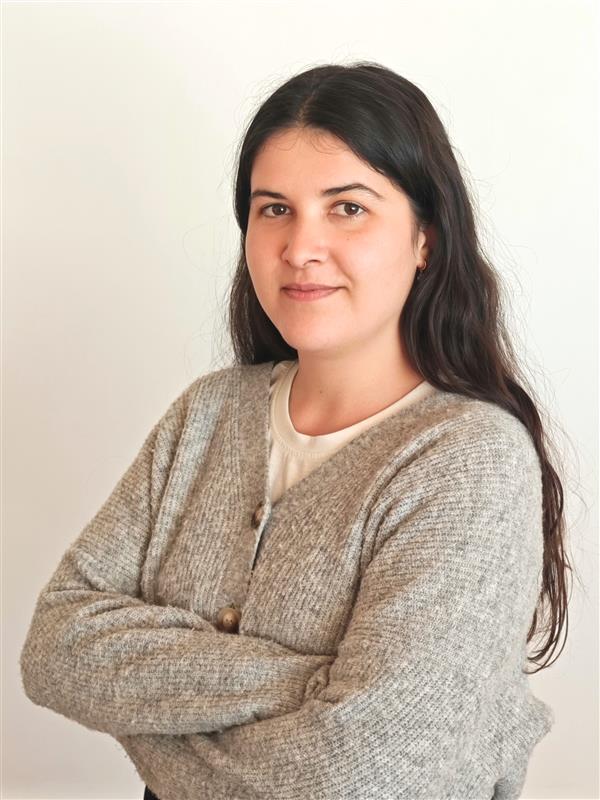
Image: Alex Mascaraque León y Ángela García Grech
Summer is officially here ☀️, and with it comes swimming pool season. Looking at this month’s image, it might seem like our lab has taken a holiday. A trampoline, a crocodile, a flamingo… 🐊🦩 But appearances can be deceiving. Our “swimming pool” is, in fact, representing a water bath as part of an automated degradation platform, and its guests are not simply enjoying a summer holiday. In this water bath, polymeric materials are immersed in controlled degradation conditions, allowing us to understand how materials change over time when they are exposed to different solutions.
This Image of the Month highlights our automated degradation monitoring system 🤖. In this setup, to allow every sample to have its own degradation environment, Falcon tube caps are replaced by custom polypropylene (PP) caps that hold each sample individually. This modification transforms every tube into an independent degradation chamber. Traditionally, degradation studies have relied on manual handling, with researchers periodically retrieving samples for characterization before returning to repeat the process days or weeks later. While effective, this approach is time-consuming and limits the number of materials and conditions that can be investigated simultaneously.
Every swimming pool needs a lifeguard 🛟. Ours just happens to be a robot. The robot takes care of repetitive and time-consuming operations, ensuring precision and consistency, making sure every sample follows the same protocol. By combining collaborative robotics with a modular degradation platform, we can automate repetitive tasks, increase experimental throughput, improve reproducibility, and explore a much broader range of materials and degradation conditions.
PhD Researcher
PhD Researcher
Don’t forget to follow us on Linkedin to keep updated of all the relevant information from the BCD group!

Today, we celebrate the International Day of Women and Girls in Science, a day to recognize the talent, dedication, and impact of the many women who contribute every day to

We are very happy to welcome Dr. Patricia González Jiménez as a new postdoctoral researcher in the BCD Group. Her work aims to bridge experimental models and predictive tools to
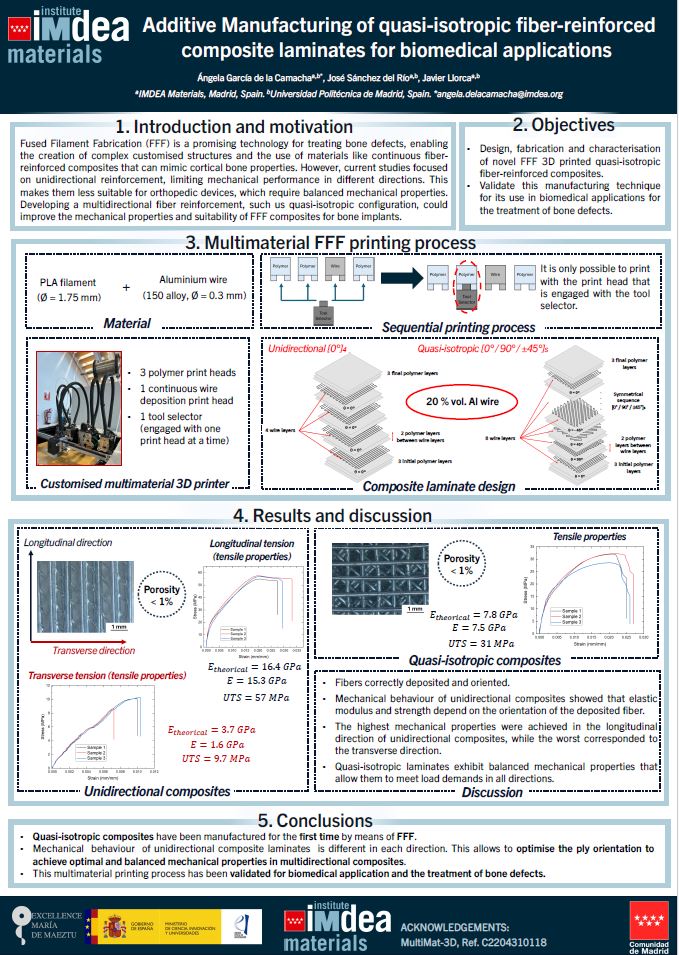
Last week, from January 22nd to 24th, members of the BCD Group attended the II Workshop on Additive Biofabrication, held in Santiago de Compostela. The event brought together researchers working

Today, we celebrate the International Day of Women and Girls in Science, a day to recognize the talent, dedication, and impact of the many women who contribute every day to

We are very happy to welcome Dr. Patricia González Jiménez as a new postdoctoral researcher in the BCD Group. Her work aims to bridge experimental models and predictive tools to
Last week, from January 22nd to 24th, members of the BCD Group attended the II Workshop on Additive Biofabrication, held in Santiago de Compostela. The event brought together researchers working
Nafiseh Mollaei, Alireza Rezaei, Biaobiao Yang, Mónica Echeverry-Rendón, Jon M. Molina-Aldreguía, Federico Sket, Javier Llorca, Acta Materialia, 2026
Mirella Llamosí, Bruno F. Gomes-Ribeiro, Mónica Echeverry-Rendón, Jose Yuste, Julio Sempere, Mirian Domenech, Antibiotics, 2026
Jesús Ordoño, Carlos Aguilar-Vega, Natalia Téllez-Fouz, Guillermo Domínguez, Carmelo de-María, Andrés Díaz-Lantada, Jon Molina-Aldareguia, Mónica Echeverry-Rendón, Biomaterials Advances, 2026