
- 3D printing is revolutionising the manufacture of personalised implants, homes, and even infrastructure for space exploration. Its versatility places it among the technologies with the greatest potential to transform science and engineering.
Published by: Ángela García de la Camacha Díaz. Predoctoral researcher in IMDEA Materials
The original version of this article can be found in Spanish in Fundación Muy Interesante.
Today, 3D printing is one of the most revolutionary technologies of the 21st century. Since its emergence in the 1980s and its widespread adoption during the 2010s, many people now own a 3D printer at home. While this technology offers countless benefits on a domestic scale, at IMDEA Materials we see the virtually limitless opportunities it presents for science and engineering. From manufacturing fully personalised implants and prostheses tailored to each patient’s individual needs, to its enormous potential for constructing buildings, even on other planets.
So yes, 3D printing truly knows no boundaries. Not only because it aims to reach Mars and even the Moon, but also because, when it comes to design and manufacturing freedom, almost nothing can stand in its way.
Why is 3D Printing Such a Unique Technology?
3D printing breaks one of the fundamental rules that has governed manufacturing for centuries. While many traditional manufacturing methods begin with a solid block of material and gradually remove what is unnecessary to achieve the desired shape, 3D printing follows a completely different approach: it builds objects layer by layer. This is precisely why scientists and engineers refer to it as Additive Manufacturing. This simple principle unlocks an unprecedented degree of design freedom, enabling the production of shapes and geometries that would be extraordinarily difficult, or even impossible, to achieve using conventional manufacturing techniques.
It is therefore no surprise that this manufacturing freedom has fuelled not only the imagination and ingenuity of scientists and engineers, but also the creativity of artists. Particularly in the world of sculpture, 3D printing has established itself as an exciting new artistic medium.
The Artist’s New Role
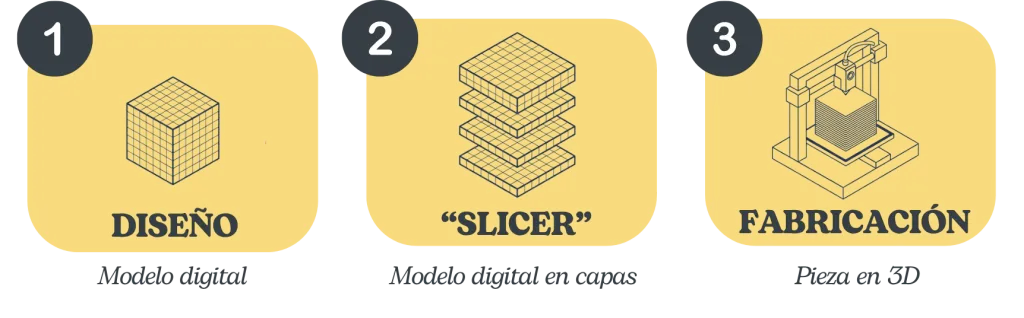
To understand why 3D printing has become so compelling in the art world, it is important to recognise that the process does not begin with the printer itself. It begins with an idea. Like any creative process, that idea first takes shape during the design stage. Here, the artist enjoys remarkable creative freedom, using Computer-Aided Design (CAD) software to create a digital model of the piece they wish to produce.
The complexity and quality of the final work therefore depend, above all, on the artist’s skills as a designer, and, in some cases, even as a programmer. This represents one of the most significant transformations brought about by 3D printing: it has redefined the traditional role of the sculptor, who must now combine artistic talent with digital expertise. In the world of 3D printing, the sketchbook has largely been replaced by a computer screen.
The Journey from Idea to Artwork
So what happens next? Once the artist has created their digital model, how does the machine know what to produce?
The answer lies in a crucial intermediate step that bridges digital design and physical manufacturing.
Between the digital model and the printer sits an essential piece of software known as a slicer. Acting as a translator, the slicer takes the three-dimensional model and divides it into hundreds or even thousands of thin layers that the printer can build one at a time.
This process generates G-code, the universal language that allows the printer to understand the design. G-code contains every instruction required for printing: coordinates, movements, speeds, temperatures, and precise commands that guide the machine throughout the entire process, gradually transforming a digital concept into a tangible work of art.
3D Printing in Art: Already a Reality
Many artists have already embraced 3D printing as a means of artistic expression. Among the most influential is the American artist Joshua Harker, widely regarded as one of the pioneers of 3D-printed sculpture.
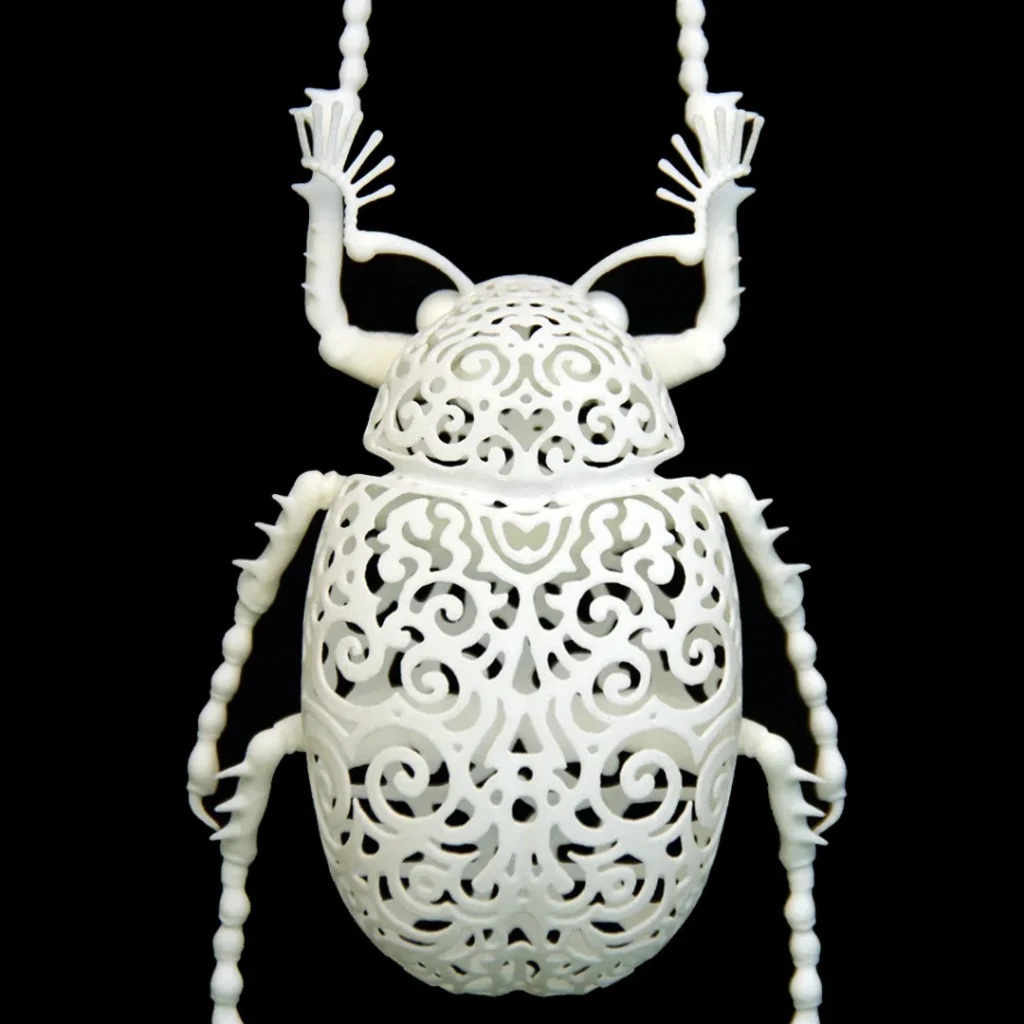
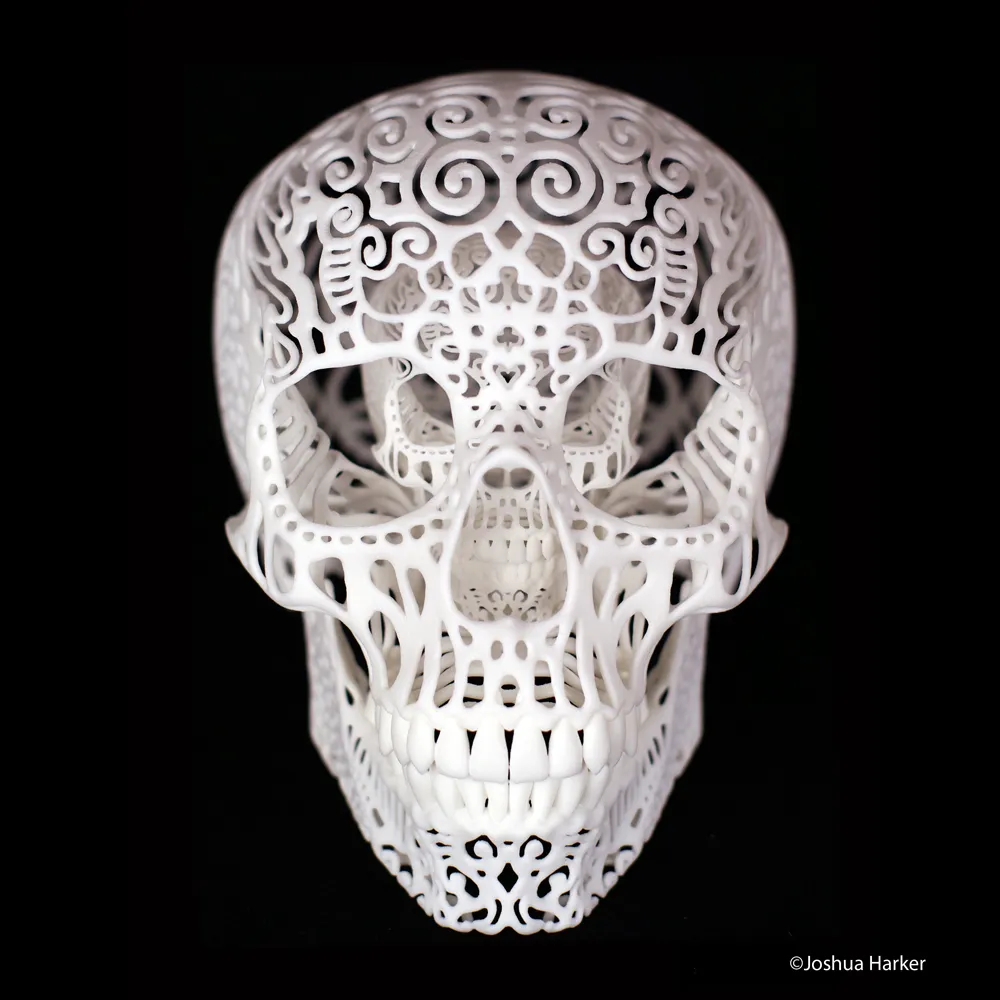
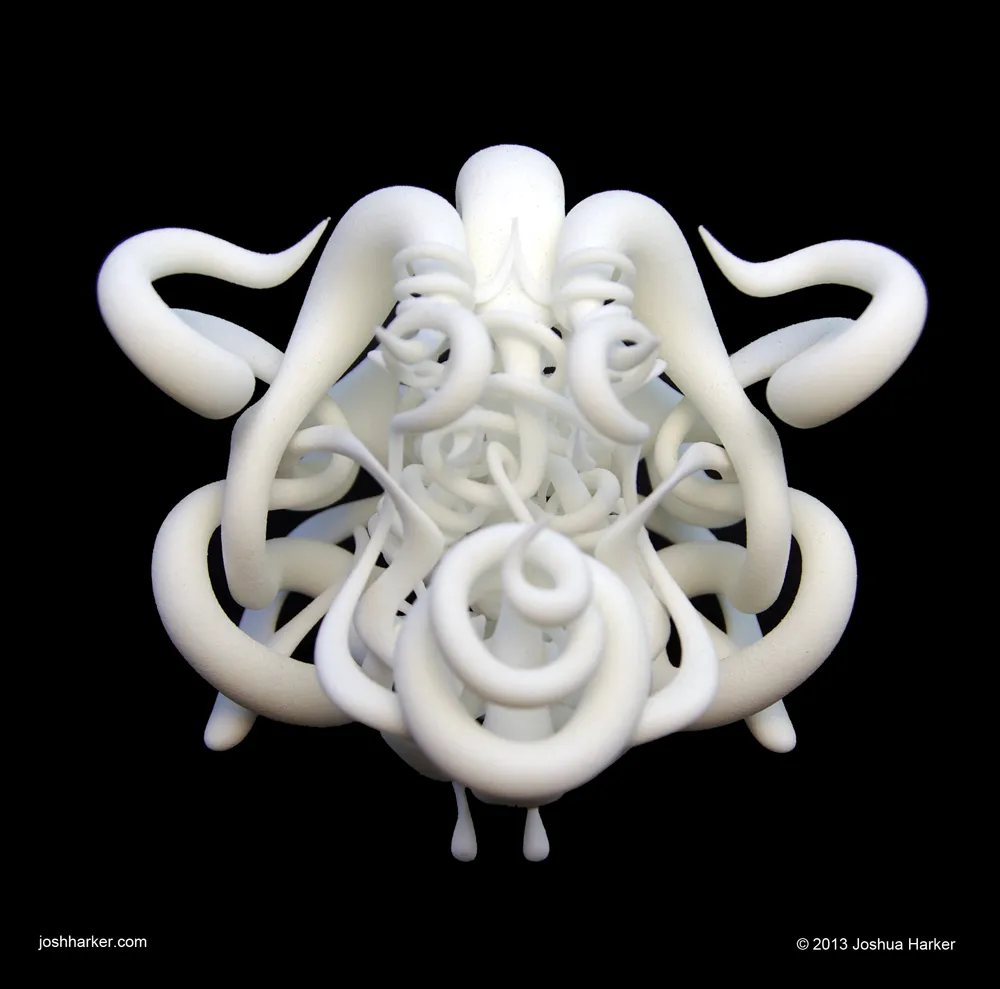
His Tangles series features sculptures of such extraordinary complexity that they would have been impossible to manufacture using traditional methods.
Developed over nearly two decades of exploration at the intersection of art and technology, his work is characterised by intricate, seemingly impossible geometries, exemplified by pieces such as Crania Anatomica Filigre and Coleoptera Filigre. Collectively, these works are considered milestones in the history of artistic 3D printing and have established Harker as one of the field’s most recognised figures.
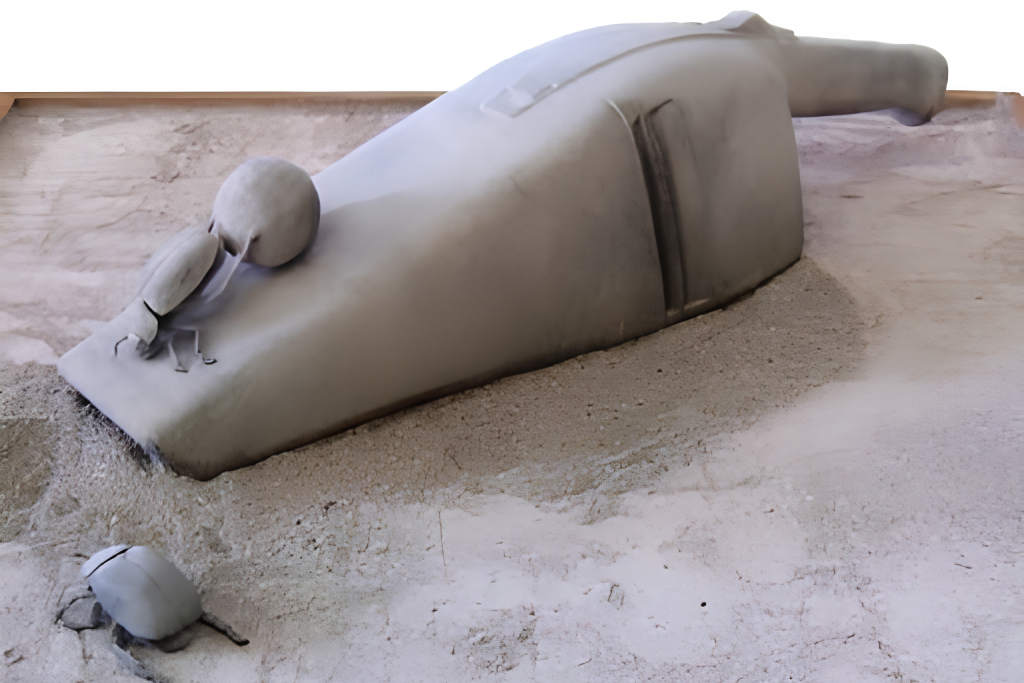
Yet if we are talking about pushing the creative boundaries of 3D printing, we must also mention the Dutch artist Wieki Somers. She uses additive manufacturing not only to create complex geometries but also as a means of exploring unconventional materials capable of giving her work profound emotional impact.
Indeed, one of the greatest strengths of 3D printing lies in its remarkable material versatility. Objects can be produced from polymers, metals, ceramics, and even biological materials. Working at this intersection between technology and the organic world, Somers created Consume or Conserve, a series of sculptures produced using human ashes.
Rich in symbolism, the work poses an uncomfortable question: What value do we assign to objects in a society dominated by consumption and disposability? It demonstrates that 3D printing is capable of producing far more than physical forms—it can also give shape to powerful ideas about materiality, memory, and what it means to be human.
When Technology Liberates Art
So yes, 3D printing is transforming the worlds of art and sculpture. But this inevitably raises one final question: could 3D printing become a threat to traditional art?
History suggests otherwise. Time and again, technological and scientific advances have enriched artistic practice rather than diminished it. One of the clearest examples emerged in the 19th century with the invention of photography. Before photography, painting served primarily as a means of faithfully representing reality. Artists devoted themselves to creating accurate depictions of landscapes, portraits, and still lifes. Then photography arrived.
Rather than replacing painting, photography liberated it.
Freed from the obligation to document reality, painters began exploring entirely new forms of expression. Impressionism, Expressionism, Post-Impressionism, and Abstract Art shifted the focus towards light, colour, emotion, and personal interpretation. Photography did not kill painting, it expanded the possibilities of art.
This is just one of many examples throughout history demonstrating the deeply symbiotic relationship between technology and artistic creativity. We can therefore be confident that the arrival of 3D printing in sculpture will not destroy traditional art. It will simply transform it. From clay to bytes, creativity can now be printed in three dimensions.
Quite imPRESSive, wouldn’t you agree?
References
- Elhadad, A. A., Rosa-Sainz, A., Cañete, R., Peralta, E., Begines, B., Balbuena, M., Alcudia, A. y Torres, Y. «Applications and multidisciplinary perspective on 3D printing techniques: Recent developments and future trends.» Materials Science and Engineering: R: Reports 156 (2023): 100760.
- Di, J. y Areerungruang, S. «The Evolution of Materials and Technology: Innovative Applications in Contemporary Sculpture Art.» Voices and Visions: Journal of Humanities and Social Sciences 8.2 (2025): 17-30.
- https://www.joshharker.com/
- https://studiowiekisomers.com/
The original version of this article can be found in Spanish in Fundación Muy Interesante.